Hegseth Forces Out US Army Chief Randy George Mid-War: What Really Happened Inside The Pentagon
Trump Fires Pam Bondi: Why The Attorney General Lost Her Job After Just 14 Months
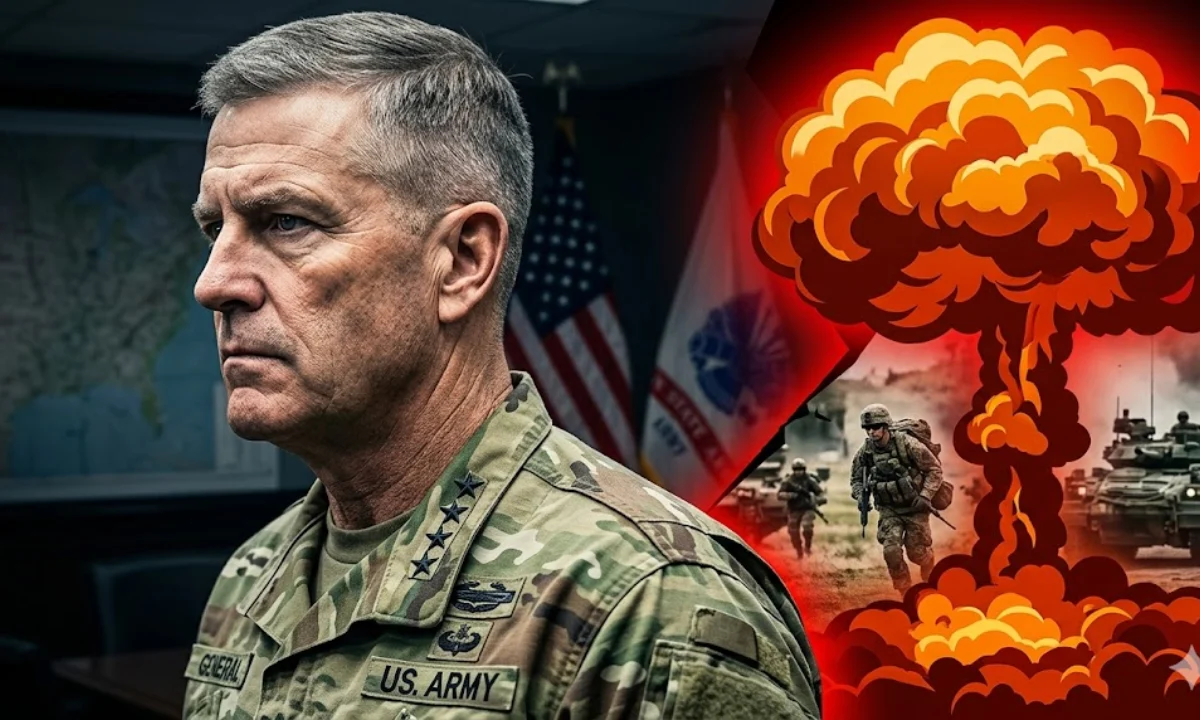
The United States Army just lost its top general in the middle of an active war. On April 2, 2026, Defence Secretary Pete Hegseth called General Randy A. George during a meeting and told him to retire immediately. Just like that, the 41st Chief of Staff of the US Army was out. No formal press conference. No clear public explanation. Just a short social media post from the Pentagon confirming the exit.
This is not a normal military story. Firing a top general during wartime is almost without any historical precedent in modern American history. The decision has shocked senior Army officials, confused allies, concerned defence experts, and split the American public right down the middle.
To understand why this matters, you need to understand who Randy George is, what he built during his time as Army Chief, why Hegseth wanted him gone, and what this means for the US military as it fights in Iran right now.
Table of Contents
Who Is General Randy George & Why His Record Matters
Randy Alan George was born on November 1, 1964, in Alden, Iowa. He enrolled in the US Army in 1982 and later went to the United States Military Academy at West Point, where he was commissioned as an infantry officer in 1988.
Over the next four decades, George served in almost every major US military conflict. He deployed during Operation Desert Shield and Desert Storm with the 101st Airborne Division. He served multiple tours in Iraq and Afghanistan. He commanded the 173rd Airborne Brigade in Iraq and the 4th Brigade Combat Team in Afghanistan. He later commanded the entire 4th Infantry Division and then I Corps at Joint Base Lewis-McChord.
His official record shows him as a graduate of the Command and General Staff College and the US Naval War College, with a Master of Science in Economics from the Colorado School of Mines.
When the Senate confirmed him as Army Chief of Staff in 2023, the vote was 96-1. That number tells you everything about how respected he was across political lines.
As Chief, George launched programmes focused on drone technology, AI-powered targeting, and fielding new battlefield systems. He also helped lead the Army out of one of its worst recruiting crises in modern history.
On May 1, 2025, George and Army Secretary Daniel Driscoll announced the Army Transformation Initiative, described as the Army’s biggest restructuring in a generation. It included the creation of transformation-in-contact brigades and plans to merge several existing Army commands.
The “transformation in contact” programme was a specific effort to put new technology directly into the hands of troops on the ground. Three infantry brigades tested new drones, AI systems, and tactical equipment in real battlefield conditions. Based on what worked and what did not, the Army then updated its training and purchasing decisions. This was bottom-up innovation at a real scale.
George also made structural cuts. He reduced personnel at Army headquarters by 1,000 positions to eliminate bureaucracy and redirect resources toward combat units. He declined to fill 12 of 219 general officer slots, calling those positions non-essential.
This was not a man who was stuck in the past. He was actively reshaping the Army for future large-scale conflict. His removal, by many measures, came at the worst possible time.
What Actually Caused The Fallout With Hegseth
This is where the story becomes complicated. The Pentagon gave no official reason for the firing. But multiple US officials and major news organisations reported the same chain of events.
At the heart of the conflict was Hegseth’s decision to block the promotion of four Army officers from a list of 29 personnel. Two of the blocked officers were Black men, and two were women. The remaining officers on the list were mostly white men.
George and Army Secretary Driscoll refused to remove those four officers from the promotion list, citing their long records of exemplary service.
About two weeks before the firing, George requested a meeting with Hegseth to discuss the stalled promotions and to raise concerns that the defence secretary was interfering unnecessarily in Army personnel decisions. Hegseth refused to take the meeting. That refusal made the break impossible to repair.
George’s firing also stemmed from Hegseth’s troubled relationship with Army Secretary Dan Driscoll. George and Driscoll had been close allies. Hegseth reportedly viewed Driscoll as a rival.
According to two US officials, George’s dismissal was motivated by clashing personalities and not by disagreements over where the Army is actually headed. One official described the firing during a war as “insane.”
So this was not a story about two men disagreeing on military strategy. It was a power struggle over who controls Army personnel decisions and whether a defence secretary can override decades of promotion standards based on personal preference.
George’s proximity to former Defence Secretary Lloyd Austin, under whom he served as senior military assistant, was also reportedly considered a mark against him in Hegseth’s circle.
How The Firing Happened: What Senior Officers Felt In The Room
The way this firing unfolded was unusual even by Pentagon standards. Senior Army leadership learned about George’s firing at the same time it was made public. There was no prior consultation.
George himself was informed during a phone call from Hegseth while he was already in a meeting. He later addressed his staff in person, and they reacted very stoically to the news.
One US official told CNN the decision “didn’t feel like a very thought-out decision,” given the operational demands on the Army during wartime.
The Pentagon’s formal statement was brief. Pentagon spokesperson Sean Parnell confirmed that George “will be retiring from his position as the 41st Chief of Staff of the Army effective immediately,” adding that the Department of War was “grateful for his decades of service.”
No reasons. No briefing. No transition plan made public.
Why Firing A General During Wartime Is So Serious
The US military is currently fighting in Iran. The conflict, sometimes referred to in defence circles as Operation Epic Fury, has been running for over a month. The US Army has been deploying air and missile defence units to the region. Thousands of soldiers from the elite 82nd Airborne Division have also started arriving in the Middle East, with the possibility of expanded ground operations on the table.
This matters because the Army Chief is not just a symbolic title. That person advises the Chairman of the Joint Chiefs and the defence secretary on Army capabilities. During active combat, consistent leadership at the top directly affects how forces are deployed, equipped, and directed.
| What changes when Army Chief is replaced mid-war | Why it creates risk |
|---|---|
| Advice to the Joint Chiefs | A new acting chief needs time to get up to speed on active operations |
| Ongoing weapons and drone procurement | George had years of institutional knowledge on these programmes |
| Coordination on air and missile defence | US Army units in the Middle East depend on clear command direction |
| Troop morale | Uncertainty at the top can filter down quickly |
| Strategic technology decisions | The transformation initiative was his flagship programme |
Reuters noted that firing a top military leader during wartime is nearly without precedent, even as Hegseth has moved quickly to reshape the department.
Senator Chris Murphy, a member of the Senate Foreign Relations Committee, suggested that the ousted generals were likely telling Hegseth that his Iran war plans were “unworkable, disastrous, and deadly.” The White House denied any such rift over strategy.
The Broader Pentagon Purge: A Pattern That Was Already Building
The firing of Randy George did not happen in isolation. It is part of a much larger reshaping of the US military’s senior leadership since Hegseth took office in January 2025.
Hegseth has now removed more than a dozen senior military leaders across multiple branches, including Chief of Naval Operations Admiral Lisa Franchetti, Chairman of the Joint Chiefs of Staff General Charles Q. Brown Jr., and Air Force Vice Chief of Staff General James Slife.
Five former defence secretaries, including retired General Jim Mattis, Donald Trump’s first defence secretary, condemned the pattern of firings as “reckless.” Their joint letter asked Congress to hold immediate hearings to assess the national security implications of the dismissals.
Along with George on April 2, two other Army generals were also removed. General David Hodne, who led the Army’s Transformation and Training Command, and Major General William Green Jr., the Army’s chief of chaplains, were both dismissed on the same day.
Hodne’s removal was especially significant. He was the person responsible for leading the Army’s technology modernisation command, a unit created specifically to speed up the adoption of drones and AI systems in combat. LaNeve, the incoming acting chief, has reportedly questioned whether the Army is moving “too fast and too far” with that technology push. That signals a possible slowdown in the exact modernisation programmes George had been pushing.
Of all the officers who held top positions at the start of 2025, only Commandant of the Marine Corps General Eric Smith and Head of the Space Force General Chance Saltzman remain in their positions. The entire Joint Chiefs structure has been reshaped.
Who Is Christopher LaNeve And What Happens Next
General Christopher LaNeve, the current vice chief of staff, will serve as acting Army chief of staff. Pentagon spokesperson Parnell described him as “a battle-tested leader with decades of operational experience” who is “completely trusted by Secretary Hegseth to carry out the vision of this administration without fault.”
LaNeve previously served as the commanding general of the 82nd Airborne Division and as a special assistant to Hegseth. He commissioned from the University of Arizona ROTC in 1990. He got Trump’s attention in the hours after the inauguration when he called into the Commander in Chief’s Ball with his troops from South Korea.
The key question now is whether LaNeve will continue the modernisation programmes George started or whether he will slow them down. The Army’s transformation initiative was a multi-year project. Stopping it midway could waste the work already done. Continuing it depends on whether the new leadership sees the same urgency in adapting to modern battlefield technology.
There is also the question of the officer promotions that started this whole conflict. Those four officers, two Black men and two women, are still waiting. Whether LaNeve follows Hegseth’s preference and removes them from the list will signal clearly where the new leadership stands.
How The World Reacted: Iran Mocks, Critics Warn, Supporters Cheer
The international reaction came fast. The Iranian Embassy in South Africa posted photos of the removed officers on social media with the caption “the regime change happened successfully. MAGA,” drawing on Washington’s own calls for regime change in Tehran. It was a sharp diplomatic jab that went viral in a matter of hours.
Inside the US, public opinion split sharply along familiar lines.
Supporters of Hegseth called the move bold and necessary. They argued that the Army needed leaders who fully commit to the administration’s war strategy without internal resistance. They see this as ending a culture of bureaucratic pushback from generals who prioritised internal politics over combat readiness.
Critics, including many veterans and defence analysts, took the opposite view. They argued that removing experienced combat leaders during an active war, for reasons linked to personality clashes and disagreement over promotion criteria, is reckless. Several pointed out that George had served in Iraq and Afghanistan multiple times and earned a Purple Heart, while Hegseth has no combat command experience at that level.
The New York Times reported in late 2025 that Hegseth had fired or sidelined dozens of officials “with little explanation,” creating “an atmosphere of anxiety and mistrust” within the department. Politico also reported that the firings had “injected a fresh wave of fear into the Pentagon over the cost of speaking up”
The Joint Chiefs of Staff paid tribute to George after his removal. Their statement read that since 1988, “General George and his family have consistently answered the nation’s call with honor and dedication.”
The Promotion Dispute: Why Race And Gender Became Central
This section deserves close attention because it explains the deepest layer of the conflict.
Hegseth wanted to remove four officers from a standard Army promotion list. That list had 29 names. Most of them were white men. The four Hegseth wanted removed were two Black men and two women.
George and Driscoll refused. They said those four officers had strong records and deserved their promotions on merit.
Senior military officers began questioning whether racial or gender bias was at play in the decision. Al Jazeera That question was never publicly answered by the Pentagon.
Hegseth has made his position on what he calls “woke” policies in the military very clear since taking office. He has rolled back DEI programmes, changed training requirements, and pushed for a strict “warrior ethos” culture throughout the services. This promotion dispute fits that pattern directly.
But the Army operates on a clear promotion system built on service records, performance reviews, and command recommendations. When a defence secretary bypasses that system to personally block specific individuals, it sets a precedent that worries many inside the military. If promotions can be vetoed based on personal preference rather than performance, the entire merit-based system that the military depends on starts to break down.
What This Means For The US Army’s Future
The US Army has about 450,000 active-duty soldiers. It is the largest branch of the military. Its chief of staff shapes everything from weapons buying to training standards to how brigades are organised.
George spent three years pushing the Army toward drone technology, AI targeting, lighter tactical vehicles, and bottom-up innovation from soldiers in the field. That work is now in the hands of someone who, according to reports, is more cautious about the pace of that change.
If the transformation initiative slows, it affects how ready the Army is to fight a modern war. The conflict in Ukraine has shown clearly that cheap drones, electronic warfare, and AI-assisted targeting are now central to how large-scale battles are fought. Falling behind on those capabilities is not a small risk.
At the same time, the broader purge of senior leadership creates a deeper problem. When experienced generals are replaced by officers chosen primarily for loyalty rather than operational track record, the institutional knowledge that takes decades to build gets lost quickly. That knowledge is not something you can read in a briefing document. It lives in the judgment of people who have actually commanded troops in the field under pressure.
References
- https://www.wikipedia.org/
- https://abcnews.com/
- https://www.aljazeera.com/
Related Posts :
Share This Post