Pentagon Prepares for Weeks of Ground Invaion in Iran: What U.S. Boots on the Ground Really Means
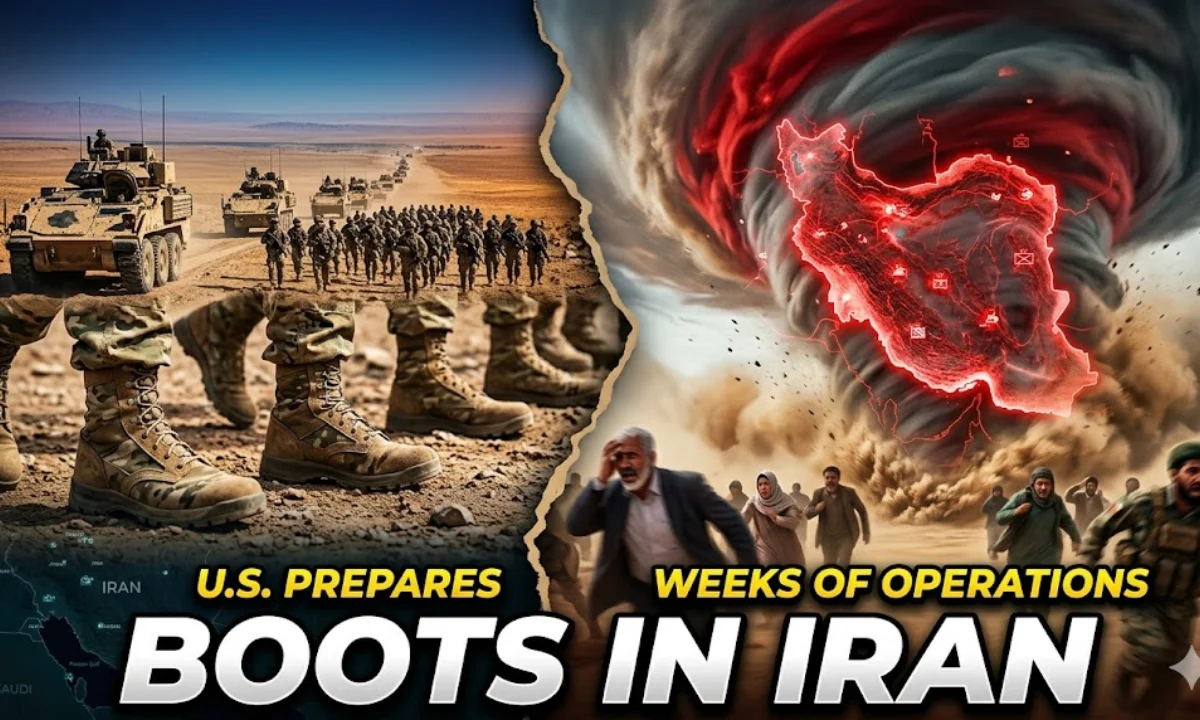
Pentagon Prepares for Weeks of Ground Operations in Iran: What U.S. Boots on the Ground Really Means
The question of U.S. ground troops in Iran is now the most watched military decision in the world. After five weeks of airstrikes, troop buildups, and daily threats, the United States is standing at a crossroads. Does President Trump send boots on the ground? Or does he find another way out?
This is not just a military story. It is an economic story, a political story, and a human story. The answer affects oil prices, global trade, American lives, and the future of the Middle East.
This article covers everything you need to know. We explain what the Pentagon is actually planning, why it matters, what the risks are, what the Strait of Hormuz crisis means for the world, and what could happen next.
Key Takeaways
- The Pentagon is preparing for weeks of ground operations in Iran as thousands of American soldiers and Marines arrive in the Middle East for what could become a dangerous new phase of the war
- The plans fall short of a full-scale invasion and could involve both conventional infantry and special operations elements
- Trump has not yet given final approval for ground operations
- More than 520 U.S. personnel have been injured and at least 15 U.S. troops have died since the beginning of the Iran War
- Brent crude oil prices surpassed $100 per barrel on March 8 for the first time in four years, rising to $126 per barrel at its peak
- The Strait of Hormuz, which carries 20% of global oil, is effectively closed
- Iran has warned that any American soldier who enters Iranian territory will be “set on fire”
- Diplomatic talks are underway but trust remains very low on both sides
How Did This War Start? The Full Background
To understand the ground troops question, you first need to understand how this war began. On February 28, 2026, the United States and Israel started a war with surprise airstrikes on sites and cities across Iran. The opening strikes assassinated Supreme Leader Ali Khamenei and several other Iranian officials. Iran responded with missile and drone strikes against Israel, U.S. bases, and U.S.-allied countries in the Middle East. Iran also closed the Strait of Hormuz, which has disrupted global trade.
This operation was named Operation Epic Fury. The stated goals included destroying Iran’s missile program, nuclear capabilities, and military infrastructure.
The opening phase focused on decapitating senior Iranian leadership while degrading missile infrastructure, launch systems, and air defenses.
The U.S. military struck over 10,000 Iranian military targets in the first few weeks. Iran struck back at U.S. bases, Gulf states, and Israel. The war quickly spread beyond Iran’s borders and became a regional conflict involving multiple countries.
Now, five weeks in, the air campaign alone does not seem to be finishing the job. That is why ground troops have entered the conversation.
What Is the Pentagon Actually Planning?
This is the most important question and the answer requires careful reading.
The Washington Post Report That Started It All
The Pentagon is preparing for weeks of limited ground operations in Iran, potentially including raids on Kharg Island and coastal sites near the Strait of Hormuz, according to United States officials. The plans fall short of a full invasion and could involve raids by special operations and conventional infantry troops.
This report from late March 2026 shocked the world. It confirmed what many had suspected. The military is not just doing airstrikes. Real ground options are on the table.
What the White House Said
The White House did not deny the report. Instead, they gave a carefully worded statement.
White House Press Secretary Karoline Leavitt said: “It’s the job of the Pentagon to make preparations in order to give the commander in chief maximum optionality.” She added that this does not mean Trump has made a decision.
This is diplomatic language for: “Yes, we are planning it, but no, the President has not said go.”
What Trump Said Directly
When a reporter asked Trump directly about ground troops, his answer was revealing.
Trump told reporters in the Oval Office: “No, I’m not putting troops anywhere,” but quickly added: “If I were, I certainly wouldn’t tell you.”
This is a classic Trump answer. He denies the idea but immediately signals that it is possible.
The Troops Already Moving
The planning is not just on paper.
The U.S. is preparing to deploy elements of the 82nd Airborne Division into the Middle East region. The planning involves the Army’s Global Response Force and the Marine Corps’ Marine Expeditionary Unit. Thousands of Marines are being moved now to the Middle East.
The U.S. Central Command (CENTCOM) said that an amphibious task force of about 3,500 Marines and sailors has arrived in the region. The force is led by the USS Tripoli and includes aircraft and amphibious assault capabilities.
These are not support troops. These are combat-ready units with the equipment needed for beach landings and ground raids.
The Four Main Ground Operation Options
According to internal U.S. government discussions reported by Axios, Trump has four main options for escalating beyond airstrikes.
Option 1: Invade or Blockade Kharg Island
Kharg Island is Iran’s main oil processing site, with 90% of its exports passing through the island before being shipped.
Capturing or blockading this island would hit Iran in its economic heart. Without oil exports, Iran’s ability to fund the war collapses quickly. This is why it is considered the most powerful option economically.
However, the risks are very high. Michael Eisenstadt, director of the Military and Security Studies Program at the Washington Institute for Near East Policy, said a mission against Kharg Island “comes with significant peril.”
The island has Iranian defensive positions, missile batteries, and is surrounded by waters where U.S. ships would be exposed to drone and missile attacks.
Option 2: Coastal Raids Near the Strait of Hormuz
The best option, according to some analysts, would be to target Iran’s coastal sites near the Strait of Hormuz, a move that would reduce Iranian capabilities of striking vessels navigating the Strait. The U.S. Central Command already targeted Iranian sites in the coastal areas of the Strait, with one operation on March 18 using 5,000-pound bombs to strike missile sites in the area.
Ground forces could do what bombs cannot fully achieve: clear out missile positions, take control of key terrain, and physically protect shipping lanes.
Option 3: Seize Enriched Uranium Stockpiles
This option is the most sensitive. Iran has hundreds of kilograms of enriched uranium. Seizing this material would directly destroy Iran’s nuclear ambitions for years.
Some U.S. officials think a crushing show of force to conclude the fighting would create more leverage in peace talks or simply give Trump something to point to and declare victory.
Seizing nuclear material would be a dramatic moment that could be presented as a clear win. But it also risks accidents, Iranian counterattacks, and international complications.
Option 4: A Massive “Final Blow” Campaign
The Pentagon is developing military options for a “final blow” in Iran that could include the use of ground forces and a massive bombing campaign. A dramatic military escalation will grow more likely if no progress is made in diplomatic talks and if the Strait of Hormuz remains closed.
This would combine ground raids with the heaviest bombing yet, targeting power plants, bridges, and energy infrastructure. Trump has already threatened this on Truth Social.
Current U.S. Casualties: What the Numbers Tell Us
The human cost of this war is real and growing. Understanding the current casualties helps explain why the ground troops debate is so serious.
At least 15 U.S. troops in the Middle East have died since the beginning of the Iran War, including six personnel who were killed in a drone strike on Port Shuaiba, Kuwait, and a soldier who died due to an enemy attack on March 1, 2026, at Prince Sultan Air Base, Saudi Arabia. More than 520 U.S. personnel have also been injured.
The table below shows a breakdown of U.S. military losses in Operation Epic Fury as reported through early April 2026.
| Category | Number | Notes |
|---|---|---|
| U.S. troops killed | 15+ | Includes drone strikes in Kuwait and Saudi Arabia |
| U.S. troops wounded | 520+ | Total injured since Feb 28, 2026 |
| Returned to duty | ~88% of wounded | Most injured have recovered and returned |
| Still seriously wounded | 10+ | As of late March 2026 |
| Killed in single attack | 6 | Drone strike on Port Shuaiba, Kuwait |
These numbers are from airstrikes and missile/drone attacks on U.S. bases. Ground operations would expose troops to far greater danger. Iranian soldiers, roadside bombs, drones at close range, and IRGC ambushes would create a much more dangerous environment than the current air campaign.
If President Donald Trump approves the plans, such an effort would mark a new phase of the war that could be significantly more dangerous to U.S. troops than the first four weeks. This is not an opinion from critics. This is the Pentagon’s own assessment.
Iran’s Military Strength: Why Ground Operations Are Risky
Understanding Iran’s military capability is essential before judging the ground troops debate.
U.S. forces would face a regular army exceeding 500,000 troops, supported by the Revolutionary Guard militias and the Quds Force. The rugged terrain would make a ground advance a logistical nightmare. Tehran also possesses a network of influence stretching from Baghdad to Beirut and Sana’a. This means that a single shot fired in Tehran would likely trigger explosions in multiple regional capitals and pose a direct threat to the security of Israel and the Gulf states.
Iran’s parliament speaker made Iran’s position very clear after news of the Pentagon’s plans broke.
Iranian parliament speaker Mohammad Bagher Ghalibaf said: “The enemy publicly sends messages of negotiation and dialogue while secretly planning a ground attack. Our men are waiting for the arrival of American soldiers on the ground to set them on fire and punish their regional allies once and for all.”
This is not empty rhetoric. Iran has:
A massive missile and drone arsenal. The war has already shown this. Iranian drones and missiles hit U.S. bases in Saudi Arabia, Kuwait, and Bahrain. Any ground operation would face these same weapons at close range.
Experienced irregular forces. The IRGC and its proxy groups have decades of experience fighting asymmetric warfare. Iraq and Afghanistan showed how costly this style of fighting can be for the U.S.
The advantage of defending home territory. Troops defending their own land have a natural morale and logistical advantage over an invading force.
Regional proxies ready to activate. Iran’s allies in Iraq, Lebanon, Yemen, and Syria can open new fronts immediately.
The Strait of Hormuz: Why This Waterway Changes Everything
The Strait of Hormuz is at the center of this entire conflict. It is why the U.S. is considering ground operations. Understanding its importance helps explain every decision being made.
The Numbers
The Strait of Hormuz facilitates the transit of around 20 million barrels of oil per day, representing roughly 20% of global seaborne oil trade. Iran closed it after the U.S. and Israel attacked the country on February 28.
The closure has been described as the largest disruption to the energy supply since the 1970s energy crisis, as well as the largest in the history of the global oil market.
The Oil Price Impact
Oil prices surged faster than during any other conflict in recent history. Brent crude oil prices surpassed $100 per barrel on March 8, 2026, for the first time in four years, rising to $126 per barrel at its peak.
Gas prices rose above $4 per gallon in the U.S., the highest since late 2023. The consumer price index rose 2.4% in January, but the oil shock caused by the war could wipe out those gains.
The table below shows the economic impact of the Strait of Hormuz closure across different sectors.
| Sector | Impact | Specific Data |
|---|---|---|
| Crude oil price | Major spike | Brent crude rose from ~$79 to $126/barrel at peak |
| U.S. gas prices | Surged 30% | Crossed $4 per gallon on March 31, 2026 |
| Fertilizer | Price spike | Urea prices rose from $475 to $680 per metric ton |
| LNG supply | Disrupted | One-fifth of global LNG normally passes through Hormuz |
| Global GDP | Declining | Dallas Fed estimates 2.9% annualized GDP reduction |
| Airline fuel | More than doubled | Jet fuel prices surged due to crude shortage |
| Fertilizer trade | 30% affected | One-third of global seaborne fertilizer transits Hormuz |
A closure of the Strait of Hormuz that removes close to 20% of global oil supplies from the market is expected to raise the average West Texas Intermediate (WTI) price of oil to $98 per barrel and lower global real GDP growth by an annualized 2.9 percentage points.
The economic pressure to reopen the Strait is enormous. This is why Trump has made it a central demand in every statement about the war. And this is why ground operations near the Strait are seen as a possible military solution.
What Reopening the Strait Would Require
Simply bombing Iran has not reopened the Strait. Iran continues to threaten ships and block traffic. Ground forces could physically clear Iranian missile positions along the coast, remove mines, and create a corridor for ships to pass safely.
This is the military logic behind the coastal raid option. It is not about defeating Iran. It is about forcing the Strait open so that global oil flows resume.
Trump’s Strategy: Unpredictability as a Tool
Trump’s approach to this war has been called confusing by critics. But there is a pattern underneath the mixed messages.
White House Press Secretary Karoline Leavitt warned Iran that Trump is ready to strike “harder than ever before” if no deal can be reached, saying: “The President doesn’t bluff and he is ready to unleash hell. Iran shouldn’t miscalculate again… any violence beyond this point will be because the Iranian regime refuses to come to a deal.”
Trump has also sent signals about wanting a deal. He told CNBC that the U.S. is “very intent on making a deal” with Iran. Pakistan has offered to host talks. Saudi Arabia, Turkey, and Egypt are all involved in mediation. This creates a situation where:
Military pressure is maximum. 10,000+ targets struck. 520+ Americans wounded. Ground troops positioned. Deadlines issued.
Diplomatic channels are open. Multiple mediators. Trump publicly says he wants a deal. Iran has received messages through back channels.
Neither side fully trusts the other. Iranian officials have said they don’t trust Trump’s negotiation push and see it as a ruse to launch sneak attacks.
Many analysts see the troop buildup as leverage rather than a confirmed plan for invasion. The logic is: if Iran believes a ground invasion is imminent, it may agree to open the Strait and negotiate a deal. The threat of invasion is the tool, not the invasion itself.
But this is a dangerous game. Once troops are positioned and threats are made, the situation can escalate beyond anyone’s control.
Trump’s Shifting Timelines: What History Tells Us
Trump has given multiple timelines for ending the war, and they keep changing.
When Trump announced the start of the operation on February 28, he said it would proceed “as long as necessary to achieve our objective.” Since then, the president has oscillated between saying the U.S. has already won the war and that the military campaign will continue for weeks, usually ranging between two and six.
Defense Secretary Pete Hegseth gave a revealing explanation for the shifting timelines.
Hegseth said: “Don’t tell your enemy what you’re willing to do or not do, and don’t tell your enemy when you’re willing to stop. It could be any particular number, but we would never reveal precisely what it is, because our goal is to finish those objectives.”
Historians note that this is not new. Thomas Patterson, a historian at Harvard Kennedy School, said: “Presidents have often offered timelines to buy time with the public during wars, and almost all of them underestimate the time.”
Examples include President Johnson and the Vietnam War, President Clinton and the Yugoslav bombing campaign, and President Bush’s “Mission Accomplished” speech two months into the Iraq War. In each case, the prediction of a quick end proved wrong.
Public Opinion: Americans Are Not Enthusiastic About Ground Troops
Despite the military buildup, the American public is not behind a ground invasion. Recent polls show that support for large-scale ground operations in Iran is extremely low. Some surveys show support as low as 7 to 20 percent depending on the question asked.
Even among Republicans who support the air campaign, there is strong reluctance to send troops into Iran for a land war. The memories of Iraq and Afghanistan are still fresh. Those wars cost thousands of American lives and trillions of dollars. They lasted for decades. And they did not achieve clear victories.
Between the lines: Iran also has a say in how the war ends, and many of the scenarios under discussion would risk prolonging and intensifying the fight rather than bringing it to a dramatic conclusion.
The word “quagmire” appears constantly in expert commentary. A quagmire means a situation where a military operation gets stuck. Progress is slow. Casualties mount. An exit is hard to find. The cost keeps rising. Public support collapses.
Iran’s geography and military strength make this a real risk. The country is large, mountainous, and heavily armed. It has experienced fighters who have been preparing for this kind of conflict for years.
What Iran Has Threatened in Response to Ground Troops
Iran’s public statements about a potential ground invasion are worth reading carefully. They are not political noise. They reflect real military doctrine.
Tehran possesses a network of influence stretching from Baghdad to Beirut and Sana’a. This means that a single shot fired in Tehran would likely trigger explosions in multiple regional capitals.
The Iranian parliament speaker has been direct: any American soldier who enters Iranian territory will face fire and punishment. The IRGC has also threatened U.S. universities in the Middle East and said all American and Israeli institutions in the region are legitimate targets.
Iran has also shown it can strike far from its borders. During the first five weeks of the war, Iranian drones and missiles hit:
- Prince Sultan Air Base in Saudi Arabia
- Camp Arifjan in Kuwait
- U.S. interests in Bahrain
- Infrastructure in Abu Dhabi and the UAE
- Israeli cities
A ground operation would not reduce these attacks. It would accelerate them. Iran would have both the motivation and the justification to strike harder at U.S. personnel and allies across the entire region.
The Diplomatic Path: Is a Deal Still Possible?
Despite all the military posturing, diplomacy is still alive. Pakistan, which shares a 900-kilometer-long border with Iran, mediates between Washington and Tehran, hosting days of talks with the foreign ministers of Saudi Arabia, Turkey, and Egypt.
Iran has also said through back channels that it is open to some form of negotiation, though it publicly denies direct talks with the U.S. Trump himself has said the U.S. is “very intent on making a deal.”
The core issues for any deal are:
The Strait of Hormuz. Iran must reopen it. This is Trump’s most public demand. The economic pressure on the U.S. and the world requires this.
Iran’s nuclear program. The U.S. wants Iran to permanently halt uranium enrichment. Iran sees this as its sovereign right.
Iran’s military capability. The U.S. and Israel want Iran’s missile program permanently degraded. Iran has vowed to rebuild.
Regime survival. Iran’s new leadership council, formed after Khamenei’s death, wants guarantees that the U.S. will not continue military operations after any deal.
These are very large gaps. But economic pressure on both sides is enormous. The continued use of the weapon of strangling the global economy by closing the Strait of Hormuz could push the global economy into a severe recession. Iran itself loses billions in oil revenue every day the Strait remains closed.
What Happens Next: The Scenarios to Watch
There are three realistic paths forward based on current conditions.
Scenario A: Diplomacy Succeeds
Iran agrees to open the Strait of Hormuz. Talks begin on nuclear issues. The U.S. pauses ground operation plans and uses the military buildup as leverage in negotiations. Ground troops are never deployed. Trump declares victory from the air campaign. This is the best case outcome for everyone.
Scenario B: Limited Ground Operations Begin
Diplomatic talks fail or stall. Trump approves limited ground raids on coastal missile sites near the Strait or on Kharg Island. Operations last weeks. The Strait is partially reopened. Iran retaliates. Casualties rise. Talks resume from a new military position. This is the most dangerous but manageable scenario.
Scenario C: Full Escalation
Limited ground operations trigger massive Iranian retaliation. Regional proxies activate across Iraq, Lebanon, and Yemen. Gulf states face intensified attacks. Oil infrastructure is destroyed. The war expands uncontrollably. This is the worst case scenario that every military expert warns about.
Sources say Trump is ready to escalate if talks with Iran don’t yield tangible results soon. Trump could first implement his threat to bomb power plants and energy facilities in Iran, for which Tehran has threatened massive retaliation across the Gulf.
Why This Matters For the World, Not Just the U.S.
This is not just an American story. The effects of this war reach every country on earth. The shipping crisis in the Strait of Hormuz is now the “largest supply disruption in the history of the global oil market,” according to the head of the International Energy Agency, Fatih Birol.
Countries most affected include:
Asian economies. About 70% of Middle Eastern oil is delivered to Japan by ships that pass through the Strait of Hormuz. China receives a third of its oil via the Strait. India, Japan, and South Korea together account for nearly 70% of Hormuz shipments.
European nations. Europe gets 12 to 14 percent of its LNG from Qatar through the Strait.
Developing countries. Many developing countries already face high debt service burdens, limited fiscal space, and constrained access to finance. Rising energy, transport, and food costs could strain public finances and increase pressure on household budgets.
Global food supply. Fertilizer represents one of the biggest downstream risks. Roughly one-third of global fertilizer trade transits the Strait of Hormuz. New Orleans fertilizer hub urea prices have already risen from $475 per metric ton to $680 per metric ton. This threatens the spring planting season for corn and soybeans in the American Midwest. Every week that the Strait stays closed pushes the world closer to a food and energy crisis.
Summary: The 5 Things You Need to Keep Watching
Based on everything covered in this article, here are the five things that will determine what happens next.
1. Trump’s final decision on ground troops. The Pentagon has the plans. The troops are positioned. The only missing piece is Trump’s approval. Watch for any official announcement from the White House or CENTCOM.
2. The Strait of Hormuz status. If the Strait reopens, pressure for ground operations drops immediately. If it stays closed, pressure builds. Check daily shipping reports and tanker tracking data.
3. Diplomatic signals from Iran. Iran publicly denies talks but privately communicates through mediators. Any serious signal from Tehran about opening the Strait or discussing nuclear limits could pause the military escalation.
4. U.S. casualty numbers. If deaths and injuries keep rising, public pressure against the war will grow. Congress may also get more vocal about authorizing or restricting military action.
5. Oil prices. US government officials and Wall Street analysts are starting to consider the prospect that oil prices might surge to an unprecedented $200 a barrel if the Strait stays closed. If prices keep rising, Trump faces enormous domestic pressure to find a solution quickly.
Related Posts :



Share This Post